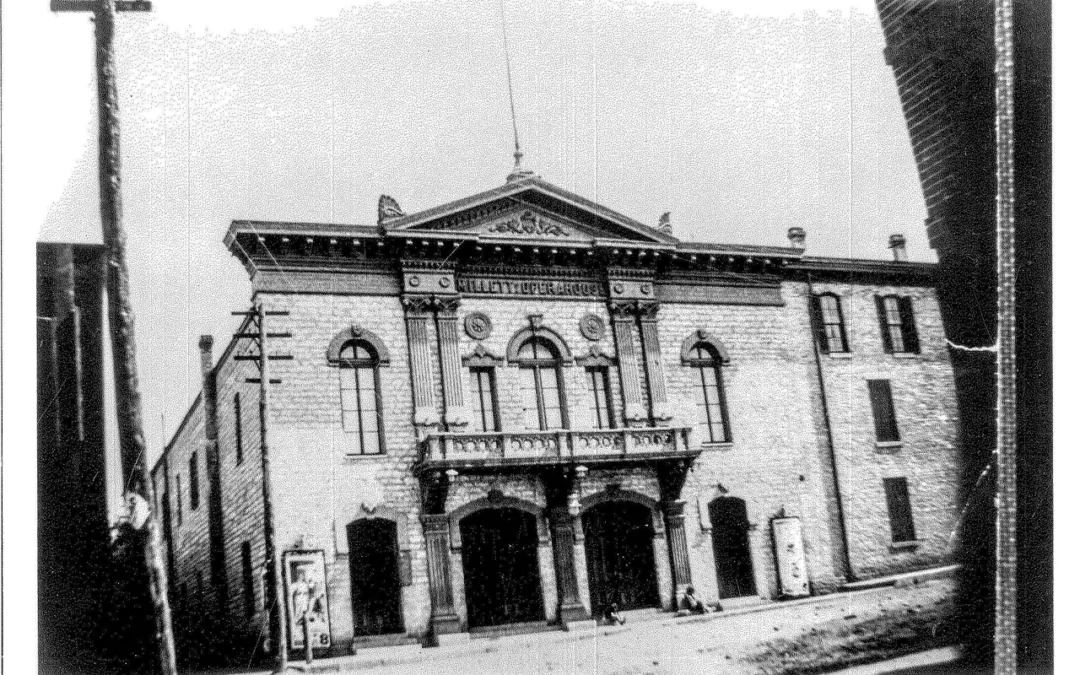
Opening Night at the Millett Opera House (Oct. 28, 1878): Austin’s brand-new Millett Opera House debuted its first theatrical performance on the evening of October 28, 1878. The inaugural show was My Awful Dad, a popular two-act comedy starring John Dillon, an internationally acclaimed comedic actor of the era. Dillon led a full company of supporting players accompanied by Max Ferhmann’s orchestra, ensuring the new theater opened with much fanfare and professional polish. This date effectively became the Opera House’s true grand opening – a previously scheduled amateur benefit performance on October 23 (the play Coquette) had apparently been postponed, making Dillon’s engagement the venue’s first public show.
Audience Reception and Public Reaction
Audience Reception and Public Reaction: Austinites greeted the opening night with tremendous enthusiasm. By 1878 the city’s population had grown above 11,000, and there was widespread civic pride and excitement for Austin’s first “true” theater venue. The Millett Opera House was the largest entertainment hall in town – Texas’ second-largest opera house at the time – boasting roughly 800 seats in its orchestra and gallery sections. Not surprisingly, the premiere drew a full house of curious theatergoers, including many of Austin’s leading citizens. Contemporary accounts describe an animated, standing-room-only crowd. Local newspapers (such as the Austin Statesman) praised the Opera House’s elegant design and reported that Dillon’s comic performance kept the audience rolling with laughter throughout the evening. Though specific reviews are scarce, by all indications the opening was a rousing success – My Awful Dad elicited hearty applause, and the venue’s acoustics and comforts were well received by the public.
Press Coverage and Notable Attendees
Press Coverage and Notable Attendees: The Austin press marked the event as a milestone in the city’s cultural life. In the days surrounding the opening, the Statesman and other papers ran notices highlighting the Opera House’s debut. (Construction of the hall had been followed closely in the press – local papers gave frequent updates, reflecting how eagerly the community anticipated a first-class theater.) While we lack a full transcript of the opening night review, the Statesman and other journals lauded John Dillon’s acting credentials and welcomed the arrival of “first-class amusements” to Austin. It was noted that many dignitaries were in attendance – city officials, businessmen, and society families turned out in force, treating the premiere as a major social occasion. It’s likely that Governor Richard Hubbard (in office in 1878) or other prominent Texans were among the audience, though specific attendee lists are not recorded in surviving sources. The scene that night was described as “brilliant” – ladies and gentlemen in their finest attire filled the limestone hall, and arriving carriages lined Ash Street (East 9th Street) outside[7]. For Austin’s citizenry, the Opera House’s opening symbolized the city’s emergence as a cultured capital.
Ticket Prices and Program Details
Ticket Prices and Program Details: Tickets for My Awful Dad were sold to the public in advance. Advertisements in late October 1878 (likely in the Weekly Democratic Statesman) announced the show. Although exact opening-night ticket prices are not preserved in print, typical theater rates of the period suggest that reserved parquet seats were about $1.00, with gallery admission around 50¢ – a modest sum that still put the night’s entertainment within reach of the middle class. The evening’s program featured Dillon in the lead role of Adonis Evergreen (the blundering “awful dad” of the farce, originally penned by British playwright Charles Mathews) supported by a full cast. Between acts, Max Ferhmann’s orchestra – a popular local ensemble – performed lively musical interludes. The combination of a known star comedian, a humorous play, and live orchestra made for a novel treat in post-Reconstruction Austin. Newspapers noted that the theater’s gas lighting and ventilation held up well, though some playfully remarked on the “scent of gas” and warmth inside from the packed crowd. On the whole, however, the comfort and scale of the new venue impressed attendees.
Cultural Atmosphere in 1878 Austin
Cultural Atmosphere in 1878 Austin: The successful opening of the Millett Opera House spoke to Austin’s growing cultural ambitions in the late 1870s. Until then, the capital had lacked a dedicated large theater; traveling shows often performed in improvised venues. The Opera House’s completion “finally realized” Austinites’ long-held wish for a proper theater. Built by entrepreneur Charles F. Millett (a local lumber magnate and former fire chief) at 9th and Congress, the imposing limestone hall immediately became the social hotspot in town. As one account notes, upon its opening the Millett Opera House was “the largest entertainment venue in Austin”, second in size only to Galveston’s opera house statewide[5]. Its stage and seating capacity allowed Austin to attract the kind of touring productions and famous performers that previously bypassed the city. Indeed, the joyous public response on opening night was just a start – in the months and years that followed, the Opera House hosted Shakespearean tragedians like Edwin Booth, diva Lillie Langtry, composer John Philip Sousa’s band, and many other luminaries. But it was the rousing reception of that first show, My Awful Dad, that proved Austinites were eager to support the performing arts. The Austin Statesman crowed that the Opera House’s debut signaled Austin’s arrival as a cultured city, no longer a “frontier town” but a community ready for high-class entertainment. Residents continued to reminisce fondly about the opening night for years – the laughter echoing in the hall, the sight of a packed audience under the gaslight, and the sense that Austin’s civic identity had been immeasurably enriched by that evening.
Legacy of Opening Night
Legacy of Opening Night: In retrospect, October 28, 1878 stands as a landmark date in Austin’s cultural history. The Millett Opera House’s inaugural performance was not only an immediate triumph but also paved the way for a thriving local theatre scene. My Awful Dad remained in the city’s collective memory as the play that launched an era of grand performances in Austin. The Opera House would serve as a venue for everything from church services and high school graduations to legislative sessions during Capitol construction, but its core identity as Austin’s premier stage was established from that very first night. The press coverage and diary accounts uniformly convey that opening night was a “brilliant success” – one that drew “an overflowing house and unbounded applause” (in the words of a later historian). For the people of Austin in 1878, the laughter and cheers ringing through the Millett Opera House on opening night heralded a new cultural age for the city.